“…This absolute compendium of cinematic knowledge should be required reading and on the shelf of every director and every film program, big or small.”
— Mark Foley, ProductionHUB.com
The Essential Guide for Directors - at Every Stage of Their Journey
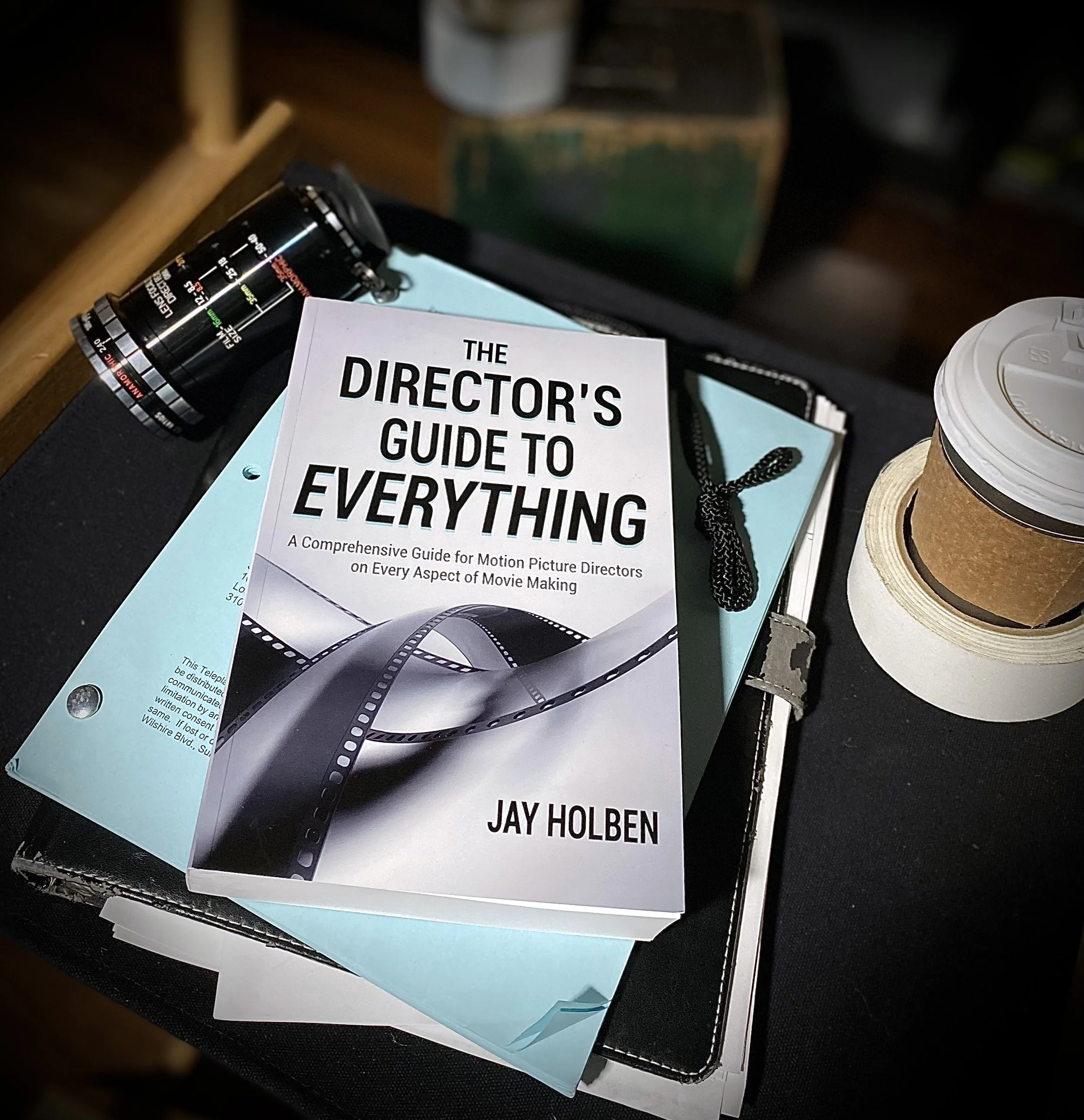
The Director’s Guide to Everything
A Comprehensive Guide for Motion Picture Directors on Every Aspect of Movie Making

600 pages
Soft Cover
Full Color
9“ x 6”
$119 $89.95
A director's job is to get a vision out of their head and into the hands of dozens of people who each speak a different professional language. The cinematographer thinks in stops and focal lengths. The production designer thinks in palettes and sightlines. The editor thinks in rhythm, and the 1st AD thinks in hours. A director who can't speak to each of them loses time, money and the crew's trust.
Jay Holben has worked his way through nearly every department in production and post. The Director's Guide to Everything takes those departments one at a time: what each does, what it needs from the director, when it needs it, and how to ask for what you want in terms it understands.
Then the book turns to the job itself: running a set, protecting the schedule and the budget, keeping people safe, and avoiding the mistakes that cost the most.
"I don't believe that a director has to become an expert in every other job on the set, but I do believe that a director must have a competency of every other job in order to communicate clearly."
— Jay Holben, from the Introduction
What's Inside
The book follows a film from the first pitch to the festival circuit, and stops at every department along the way.
The Director's Toolbox: the director's working language, making decisions, creating the right atmosphere, safety on set, and calling Action, Cut and Print.
Preproduction: pitches and lookbooks; working with producers on the budget; finding material, acquiring rights, story structure and giving notes to writers; production design, from color theory and set construction to storyboards; and casting, from sides and self-tapes to chemistry reads.
Production: directing actors, from acting techniques and rehearsal to giving actionable direction; the AD and the shooting schedule; the art department, props and firearms safety; and cinematography in depth: light, exposure, lenses, depth of field, aspect ratio, composition, coverage, blocking and camera movement. Then electric and grip, locations, makeup and hair, script supervision, sound, wardrobe, special effects, stunts, 2nd unit, and catering and crafty.
Postproduction: editing theory and working with the editor, visual effects from previs to final render, score and music rights, ADR and Foley, re-recording mixing and color correction.
Release: delivery specs, HDR, credits, DCPs, promotion, festivals and the U.S. ratings system.
Business and Career: agents, managers, PR, online presence, mentors and short films.
The Kitchen Sink: virtual production and LED volumes, AI, and the director's own health: sleep, relationships and impostor syndrome.
Who It's For
First-time directors who want to walk onto a set knowing what every department expects. Working directors who want to sharpen how they communicate. Teachers, students and those who study and write about film. And crew in any department who want to understand the person at the center of it all.
Ships worldwide. Schools ordering 10 or more copies receive an educational discount. Write to info@adakinpress.com for a code.
About the Author
Jay Holben is a director and producer in Los Angeles and an Associate Member of the American Society of Cinematographers, where he co-chairs the ASC Motion Imaging Technology Council. He is Contributing Technical Editor at American Cinematographer and has written more than 600 articles on the art and science of cinematography, including the magazine's Shot Craft column.
Over his career he has worked in nearly every role in production and post, on projects including Minority Report, Dexter and The Mandalorian. After more than a decade as a cinematographer, he turned to directing and producing full time. His directing credits include the features Before the Dawn, Black Tar Road and The Invoking 2, as well as The Mission, the ASC's StEM2 evaluation film made with the Academy and major studios. He teaches internationally, including for the ASC Master Class program.
His other books include The Cine Lens Manual (with Christopher Probst, ASC), Shot Craft, Lessons From American Cinematographer, Behind the Lens and A Shot in the Dark.

Also available from: